The best yarn for a first sweater is worsted or DK weight wool in a light-to-medium solid color — it blocks well, forgives tension variations, and rips back cleanly when you need to fix mistakes. Worsted weight yarn typically knits at 4–5 stitches per inch on 4.5–5.5mm needles, making it fast enough to see real progress while still being manageable for beginners. DK weight sits slightly lighter, usually at 5.5–6 stitches per inch on 3.75–4.5mm needles, and produces a versatile fabric you can wear across multiple seasons. Once you've chosen your yarn and swatched it, tools like La Maille can generate a pattern matched to your exact gauge and measurements, removing one of the biggest sources of anxiety for new sweater knitters.
What Makes Yarn "Beginner-Friendly"?
Not all yarn is created equal, especially when you're learning to knit a garment for the first time. The difference between a satisfying first sweater experience and a frustrating one often comes down to your yarn choice before you've even cast on a single stitch.
The best first-sweater yarn shares four key qualities:
Forgiveness: Shows your stitches clearly, hides small inconsistencies in tension, and is easy to fix when you make mistakes. Yarn that fights back every time you try to rip out a row will drain your motivation fast.
Elasticity: Stretches slightly as you work, making even tension easier to achieve. A yarn with natural spring helps your hands find a rhythm, and that rhythm is what produces consistent, beautiful fabric.
Memory: Springs back into shape, which helps your stitches look uniform even when your hands are still developing their technique. Yarns with good memory will look more polished off the needles than yarns that stay limp and stretched.
Durability: Stands up to being ripped out and re-knit multiple times without breaking down. Every knitter — beginner or expert — rips back and re-knits sections. Your yarn needs to survive that process without felting, pilling, or snapping.
A yarn that checks all four boxes gives you the best possible environment to learn. Think of it as buying yourself a safety net before you start walking the tightrope.
The Best Fiber: Wool (or Mostly Wool)
For a first sweater, wool is hard to beat. It's not just tradition or nostalgia — wool has specific physical properties that make it genuinely easier to work with, and those properties matter a great deal when you're still building your skills.
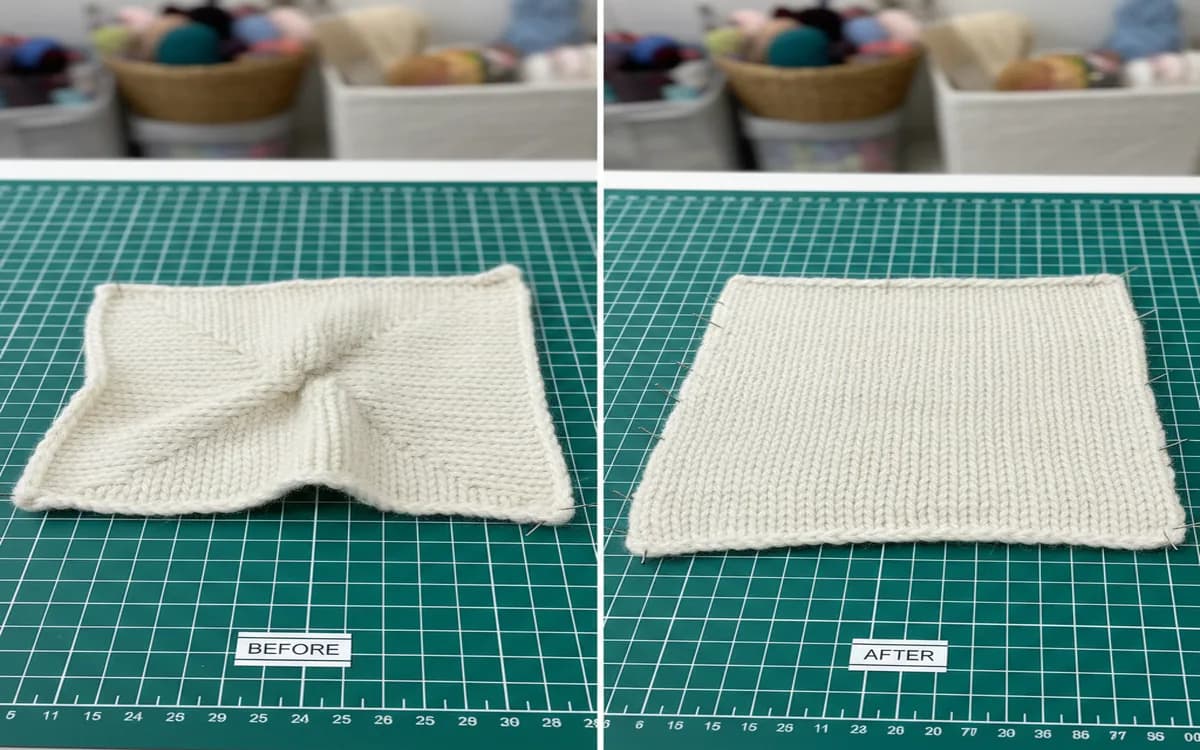
It blocks beautifully: Blocking is the transformative process of washing and shaping your finished knitting. When you wet-block a wool sweater, the fibers absorb water, relax, and bloom outward. A swatch that looked a little uneven off the needles can look remarkably polished after blocking. Tension variations of 10–15% can be evened out with a good block, which is hugely reassuring for new knitters.
It has memory: Wool's natural crimp means it springs back after stretching. This keeps your stitches defined and your fabric dimensionally stable. A wool sweater holds its shape wash after wash in a way that many synthetic fibers simply don't.
It's easy to rip back: When you make a mistake — and you will, everyone does — wool stitches come apart cleanly without sticking or snagging. You can rip out an entire sleeve and re-knit it without the yarn showing any signs of damage. This is genuinely difficult to replicate with cotton or silk, which can stick and knot as you rip.
It's warm and wearable: You'll end up with a functional, beautiful garment, not just a learning exercise. A well-blocked wool sweater in worsted or DK weight is something you'll reach for season after season.
Wool Blends Are Great Too
100% wool isn't required, and some of the most popular beginner sweater yarns are blends. Look for blends with:
- At least 50% wool or other animal fiber (alpaca, merino, lambswool)
- Nylon for added durability, especially if you knit tightly or plan to wear the sweater frequently
- A small amount of acrylic for machine washability — under 25% keeps the wool benefits intact
Avoid blends that are mostly acrylic with just a token percentage of wool listed on the label. Marketing language like "wool blend" can mean as little as 5% wool, which won't give you the blocking performance or elasticity you need. Read the fiber content closely before you buy.
What About Non-Wool Options?
Some knitters can't wear wool due to allergies or sensitivities. If that's you, look for:
- Alpaca blends: Softer than wool, with some of the same blocking and memory properties, though slightly less elastic.
- Cotton-acrylic blends: More affordable and washable, but cotton has almost no elasticity, so tension consistency becomes more important.
- Bamboo blends: Drapes beautifully but can be slippery and lacks wool's memory — approach with caution for a first project.
If you can tolerate superwash merino, that's the closest non-scratchy option to the ideal beginner wool.
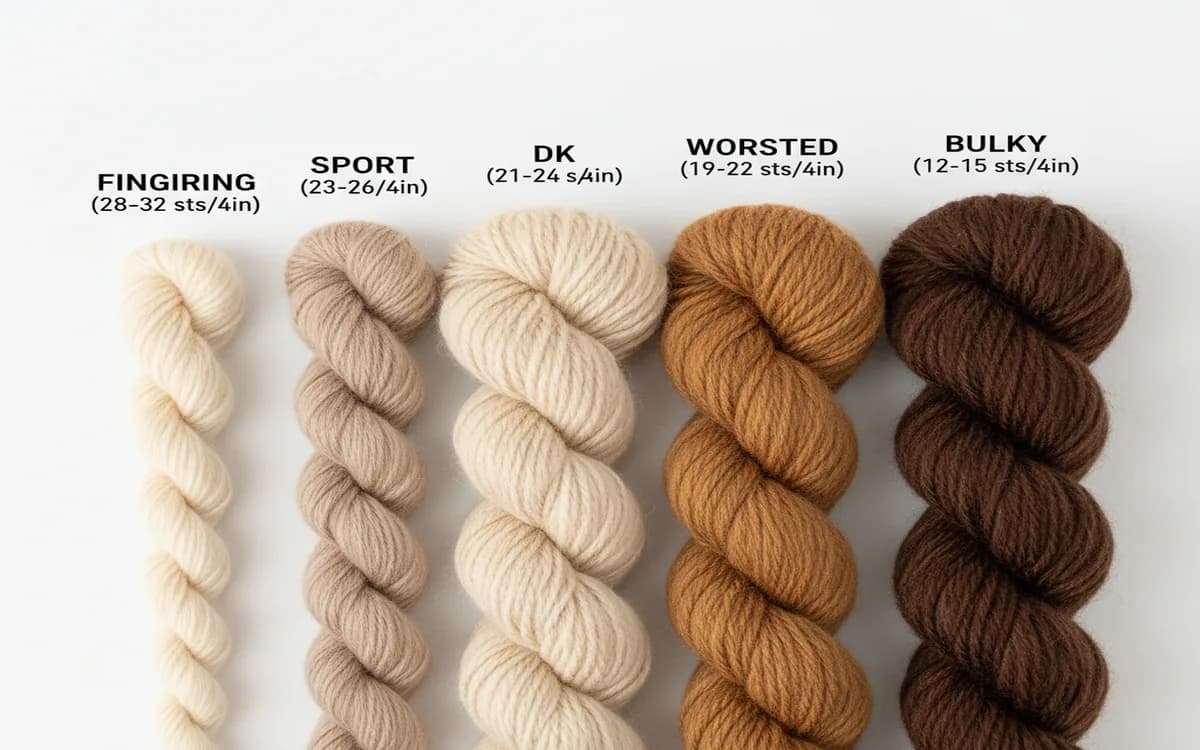
The Best Weight: Worsted or DK
Yarn weight — the thickness of the yarn itself — significantly affects your knitting experience, how quickly you progress, and how the finished fabric feels and drapes.
Worsted Weight (Aran)
Worsted weight yarn typically produces a gauge of 18–20 stitches over 10cm (about 4.5 stitches per inch) on 4.5–5.5mm needles.
Pros: Works up quickly, easy to see individual stitches, produces a substantial and warm fabric, and is highly forgiving of tension variations because the stitches are large enough to absorb small inconsistencies.
Cons: The finished sweater will be heavier, warmer, and bulkier than a DK or sport weight garment. This makes it less versatile across seasons.
Best for: Winter sweaters and cold-climate knitters, anyone who wants to see fast progress and stay motivated, knitters who struggle to see their stitches clearly, and those knitting in low-light environments.
DK Weight
DK (double knitting) weight yarn typically produces a gauge of 21–24 stitches over 10cm (about 5.5 stitches per inch) on 3.75–4.5mm needles.
Pros: Produces a lighter, more drape-y fabric, excellent stitch definition, still reasonably quick to knit compared to finer weights, and the finished sweater is genuinely wearable across three seasons — spring, fall, and mild winter days.
Cons: Takes longer than worsted weight, and the slightly smaller stitches require a little more attention, especially when you're just starting out.
Best for: Knitters who want a versatile sweater they'll wear frequently, those comfortable with smaller stitches, and anyone knitting in a temperate climate where a heavy wool sweater would be too warm most of the year.
What to Avoid for Your First Sweater
Fingering or sock weight: The results can be stunning, with beautiful drape and fine stitch definition, but a fingering weight sweater involves thousands more stitches than a worsted weight one. It takes much longer, requires far more concentration, and the thinner yarn is less forgiving of tension inconsistencies. Save this for sweater number three or four.
Bulky or super bulky: Works up fast — sometimes in a weekend — but every single stitch is visible and exaggerated. Tension inconsistencies are harder to hide, and mistakes are glaringly obvious. Less forgiving than it seems from the outside.
Novelty yarns: Fuzzy, bouclé, eyelash, or heavily textured yarns hide your individual stitches completely. You can't see what you're doing, can't find mistakes, and can't really learn from what you're making. Not suitable for a first garment.
Slippery yarns: Pure silk, bamboo, and Tencel slide off needles constantly and are much harder to control. They also have no memory, meaning tension variations stay exactly where they land.
Color Matters
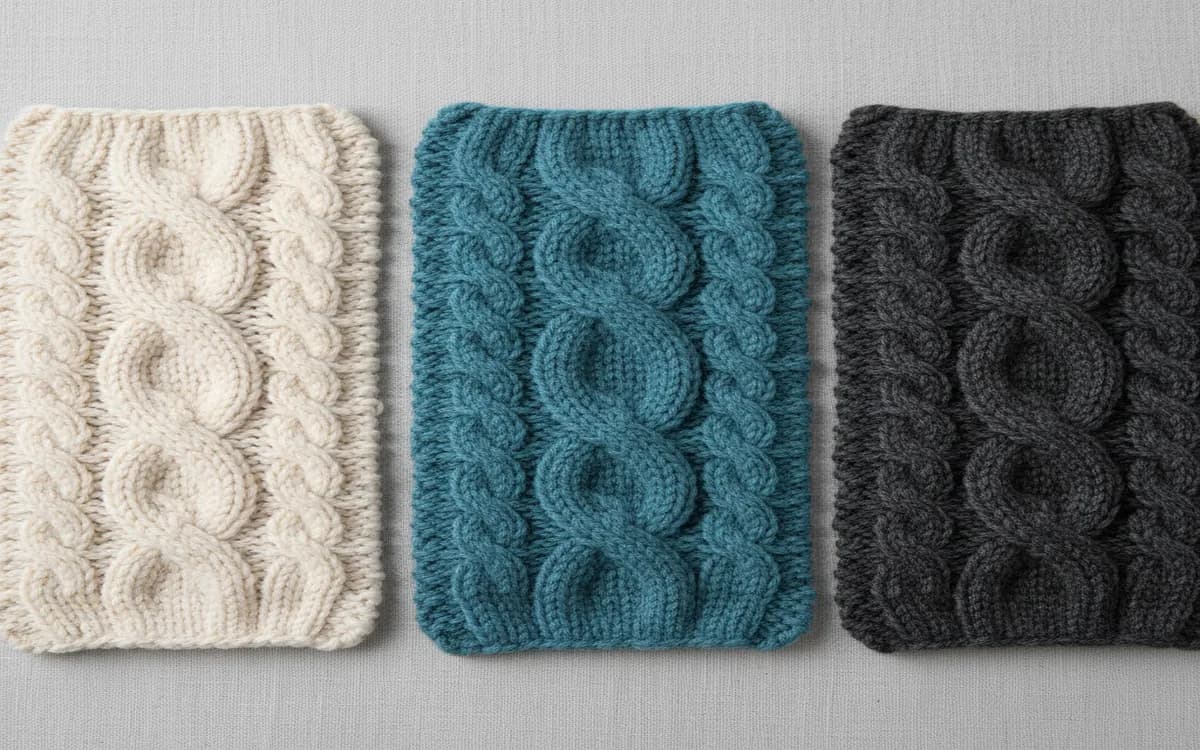
The color of your yarn affects how well you can see your work, and for a first sweater, visibility is everything. You need to see your stitches clearly to count them, read them, and catch errors before they compound over multiple rows.
Light colors such as cream, soft gray, pale blue, or blush show your stitches with maximum clarity. You can see exactly what's happening in real time, which makes fixing mistakes much easier.
Medium colors offer a good balance — they're visible enough to work with easily while hiding the occasional imperfection more gracefully than a stark white would.
Avoid very dark colors: Black, navy, dark charcoal, and deep burgundy are genuinely difficult to see, even under bright lighting. Many experienced knitters avoid these for complex patterns for exactly this reason. Save them for when you can knit almost by feel.
Avoid heavily variegated yarns: Multi-color, self-striping, or gradient yarns can obscure stitch definition, making it hard to track your position in a pattern. They also make it harder to see mistakes. A gentle heather or tweed with subtle texture variation is fine — a wildly shifting colorway is not.
Choose a color that makes you happy every time you pick up your work. You're going to be looking at this yarn for dozens of hours.
Recommended Yarns for First Sweaters
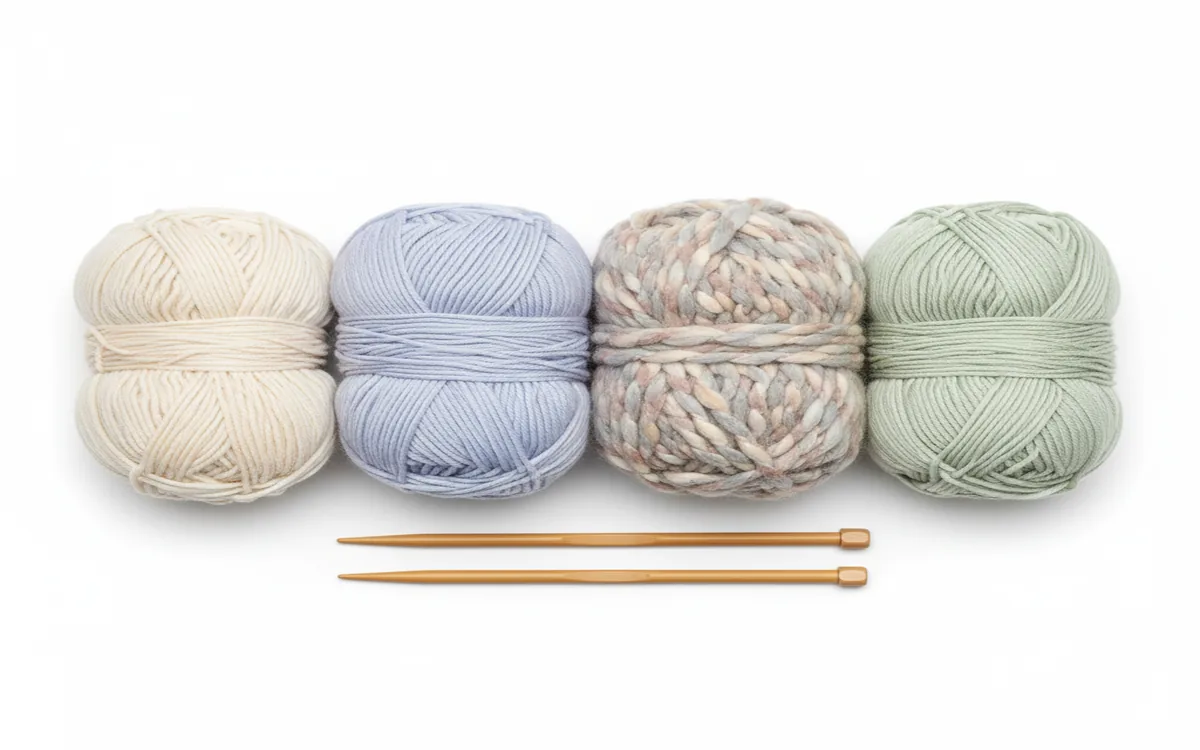
These yarns are widely available in most countries, reasonably priced, and consistently well-reviewed by beginner and experienced knitters alike. All of them meet the core criteria: good elasticity, clear stitch definition, and easy to rip back.
Worsted Weight Options
Cascade 220: A true knitting classic. 100% Peruvian highland wool, available in well over 200 colors, affordable at around $10–12 USD per 220-yard skein, and blocks beautifully. It's the go-to recommendation for a reason.
Malabrigo Rios: Soft, slightly kettle-dyed but not distractingly busy, superwash and machine washable, with excellent stitch definition. A little more expensive than Cascade but a pleasure to knit with.
Berroco Vintage: A wool, acrylic, and nylon blend that's machine washable, exceptionally soft, and very forgiving. Great if you want low-maintenance care.
Lion Brand Wool-Ease: Budget-friendly and widely available at big-box craft stores. A wool-acrylic blend that performs well for the price and is a great choice if you want to keep costs down on your first sweater.
DK Weight Options
Rowan Pure Wool DK: Soft, reliable, with a wide and beautiful color range. A slightly more premium choice but worth it for the hand feel.
Cascade 220 Sport: The lighter sibling of the worsted classic, with the same reliability and color range in a DK-adjacent weight.
Drops Lima: A budget-friendly wool and alpaca blend that knits up with a lovely softness and subtle sheen. Widely available online.
Knit Picks Swish DK: Affordable superwash merino with a huge color selection. One of the best value-for-money options for DK weight sweater knitting.
How Much Yarn Do You Need?
Yarn quantities vary based on the pattern, your gauge, and your size, but these are reliable ballpark figures for an adult sweater in a standard size (roughly a size medium):
Worsted weight: 1,000–1,400 yards DK weight: 1,200–1,600 yards
Always buy one extra skein beyond what the pattern calls for. Running out mid-project with no matching dye lot is one of the most deflating experiences in knitting — and it's entirely preventable. Extra yarn never goes to waste: it becomes a matching hat, a pair of cuffs, or a repair swatch stored with the finished sweater.
Always buy yarn from the same dye lot (the number printed on the label) to ensure consistent color throughout your project. Even small dye lot differences can be visible in the finished fabric.
What About Superwash?
Superwash wool has been treated with a process that removes or coats the fiber scales, preventing the stitches from locking together and felting in the washing machine.
Pros: Machine washable and dryer-safe in some cases. No risk of a ruined sweater if someone unfamiliar with handknits does your laundry. Significantly more convenient for everyday wear.
Cons: Superwash wool is slightly less elastic than untreated wool because the scale treatment relaxes the natural crimp. It may also grow slightly more with wear, especially in heavier stitch patterns. Some knitters find that superwash yarn feels a little more slippery on the needles.
For a first sweater, superwash is an entirely reasonable and practical choice. The convenience of machine washing offsets the slight reduction in performance, and you'll likely appreciate the low-maintenance care as you're still getting comfortable with the knitting itself.
Testing Your Yarn Before Committing
Before you buy 10 skeins of something you've never worked with, do a small test:
1. Buy one skein and cast on a proper gauge swatch — at least 6 inches square, knit flat or in the round to match your pattern's construction. 2. Knit a few inches and pay attention to how the yarn feels in your hands. Does it split? Does it slide too easily? Is it rough or scratchy? 3. Wash and block the swatch exactly as you would the finished sweater. Measure it before and after. How much did it grow or shrink? Did the fabric bloom and soften? 4. Live with the swatch for a day or two. Does the texture feel good against the back of your hand? Is it itchy on your wrist?
If anything feels wrong at the swatch stage, try a different yarn before buying the full quantity. A swatch is never wasted time — it's insurance.
The Best Yarn Is One You'll Actually Knit
Beyond all the technical considerations, the most important quality in your first sweater yarn is that it excites you enough to keep showing up and knitting.
Choose a color that makes you happy every time you pull it out of your bag. Choose a price point that doesn't make every mistake feel catastrophic — expensive yarn is wonderful, but it can add psychological pressure you don't need on your first sweater. Choose a texture that feels genuinely pleasant in your hands for the many hours you'll spend together.
You're going to knit hundreds of hours on this project. Make it something you love holding.
From Yarn to Sweater
Once you've chosen your yarn and completed a proper gauge swatch, you're ready to find or generate a pattern. One of the biggest challenges with a first sweater is finding a pattern that actually fits your specific measurements and your actual gauge — not the gauge printed on the yarn label. Tools like La Maille let you enter your gauge, your measurements, and your preferred sweater style, then generate a custom pattern built precisely for you. That removes a significant source of frustration for new sweater knitters: the moment you realize halfway through a sleeve that something doesn't fit.
Frequently Asked Questions
What's the best yarn for a first sweater? Worsted or DK weight wool in a light-to-medium solid color is the top recommendation. Wool blocks well to even out tension variations, has natural memory and elasticity, rips back cleanly when you need to fix mistakes, and produces a warm, wearable finished garment. If 100% wool isn't an option, look for a blend with at least 50% animal fiber.
Why is wool recommended for beginners? Wool is forgiving in several specific, practical ways. It can be wet-blocked to even out tension inconsistencies of 10–15%, it springs back into shape rather than staying stretched, and it unknits cleanly without splitting or snagging. These properties reduce the consequences of the mistakes that every beginner inevitably makes.
Should I use superwash wool for my first sweater? Superwash is a solid choice for beginners, primarily because the machine-washable convenience reduces the care anxiety that comes with owning a handknit garment. Regular wool has slightly more elasticity and blocking performance, but requires hand washing. Either works well for a first sweater — choose based on how much you want to think about laundry.
How much yarn do I need for a sweater? A rough guide for adult sizes: worsted weight requires approximately 1,000–1,400 yards, and DK weight requires approximately 1,200–1,600 yards. These numbers increase for larger sizes and decrease for smaller ones. Always buy one extra skein as insurance, and make sure all skeins share the same dye lot number.
Can I use acrylic yarn for a sweater? You can, and there are situations where it makes sense — particularly for practice knitting or if you're on a very tight budget. However, 100% acrylic yarn doesn't block the same way wool does, which means tension variations stay visible in the finished fabric. It also lacks the natural elasticity that makes wool so beginner-friendly. A wool-acrylic blend with at least 50% wool gives you the washability benefits of acrylic while preserving most of what makes wool work so well for learners.
What if I'm allergic to wool? Try cotton-acrylic blends or yarns made from fine alpaca, which many wool-sensitive knitters can tolerate. For a first sweater in a non-wool fiber, choose a DK or worsted weight cotton blend and be prepared that the fabric won't block the same way — but it's absolutely possible to knit a beautiful, wearable sweater from non-wool yarn. Just pay extra attention to consistent tension throughout.
How do I know if my yarn is good quality before buying a full sweater's worth? Buy a single skein and knit a proper gauge swatch — at least 6 inches square. Wash and block the swatch the same way you'd care for the finished sweater. If the yarn pills excessively, breaks during ripping back, loses its color, or changes shape dramatically beyond what the pattern expects, try a different yarn before committing to the full quantity.
Ready to start? Choose your yarn, swatch it honestly, and then use the right tools to build a pattern around what you actually have — not what the label says you should have.