The most common sweater knitting mistakes — gauge errors, dropped stitches, twisted joins, and wrong size selection — are all fixable or preventable with the right techniques. The average hand-knit sweater takes 40-80 hours to complete, making mistake prevention worth every minute of preparation. This guide covers the most frequent problems and their solutions, so you can knit with confidence whether you're following a published pattern or one generated by La Maille.
Gauge Mistakes
The Problem
You didn't swatch, or your swatch gauge doesn't match your actual sweater gauge. The finished piece is too big or too small.
How to Identify
Your stitch count is correct but the measurements are wrong. You followed the pattern exactly but it doesn't fit.
How to Fix
Before you've knit much: Rip back, change needle sizes, start over with correct gauge.
After significant progress: You have limited options. If the piece is too big, you might be able to felt it slightly to shrink (wool only). If too small, blocking can add a little ease. Major size differences can't be fixed — this becomes a learning experience.
Prevention
Always swatch. Measure your swatch after washing and blocking. Check your gauge again after knitting a few inches of the actual project.
Dropped Stitches
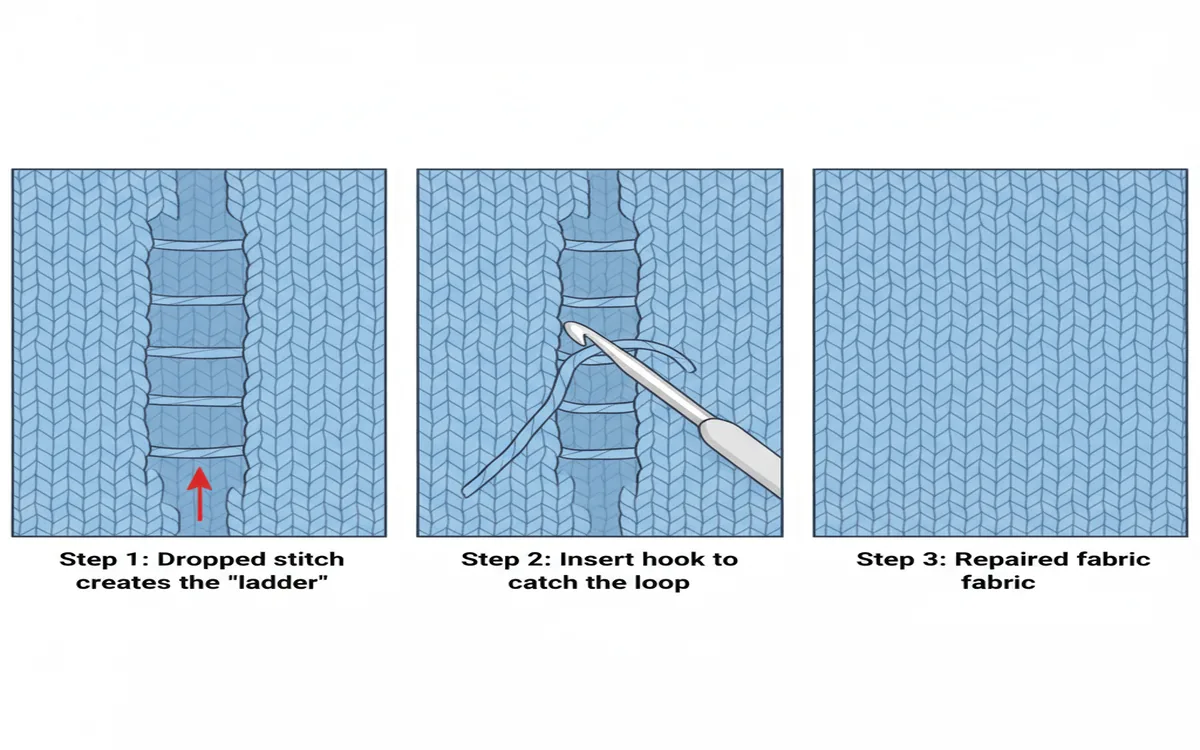
The Problem
A stitch slips off your needle and starts to ladder down.
How to Identify
A vertical column of loose horizontal bars (ladders) with a live loop at the bottom.
How to Fix
Catch it immediately: Slip the stitch back onto your needle, making sure it's not twisted.
If it's laddered down several rows: Use a crochet hook to pull each ladder bar through the loop, one by one, recreating the stitches from bottom to top. For purl stitches, work from the back.
Emergency stabilization: If you can't fix it right away, use a safety pin or locking stitch marker through the live loop to prevent further laddering.
Prevention
Check your stitch count regularly. Use lifelines (a thread run through all stitches) at key points so you can rip back to a known good row.
Twisted Stitches
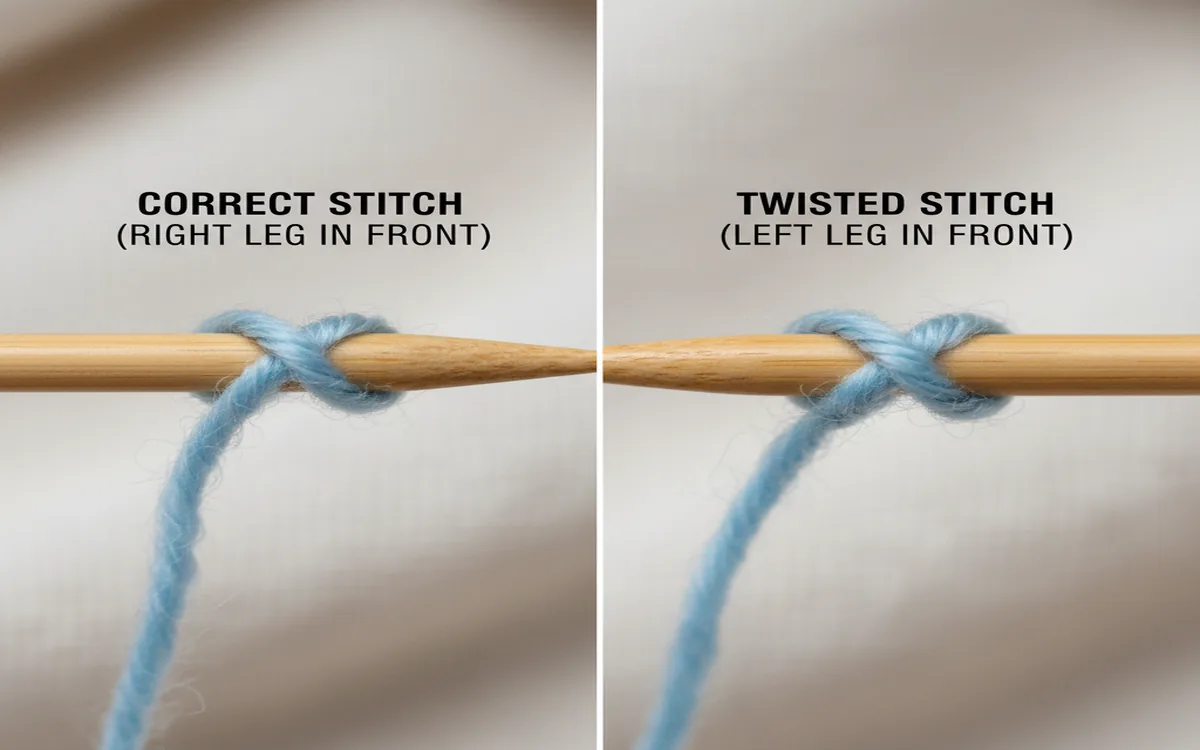
The Problem
Stitches are mounted backwards on the needle, creating a twisted appearance when knit.
How to Identify
Twisted stitches look tighter and have a slightly different texture. The legs of the stitch cross at the base instead of lying flat.
How to Fix
Individual twisted stitches: Slip the stitch off, turn it, and put it back on correctly. The leading leg (the part you insert your needle into) should be in front of the needle.
Entire twisted section: If you've twisted stitches consistently, you've essentially created a different stitch pattern. Decide whether to live with it or rip back.
Prevention
Learn to recognize proper stitch mount. When picking up stitches or working from holders, check orientation before knitting.
Accidental Yarn Overs
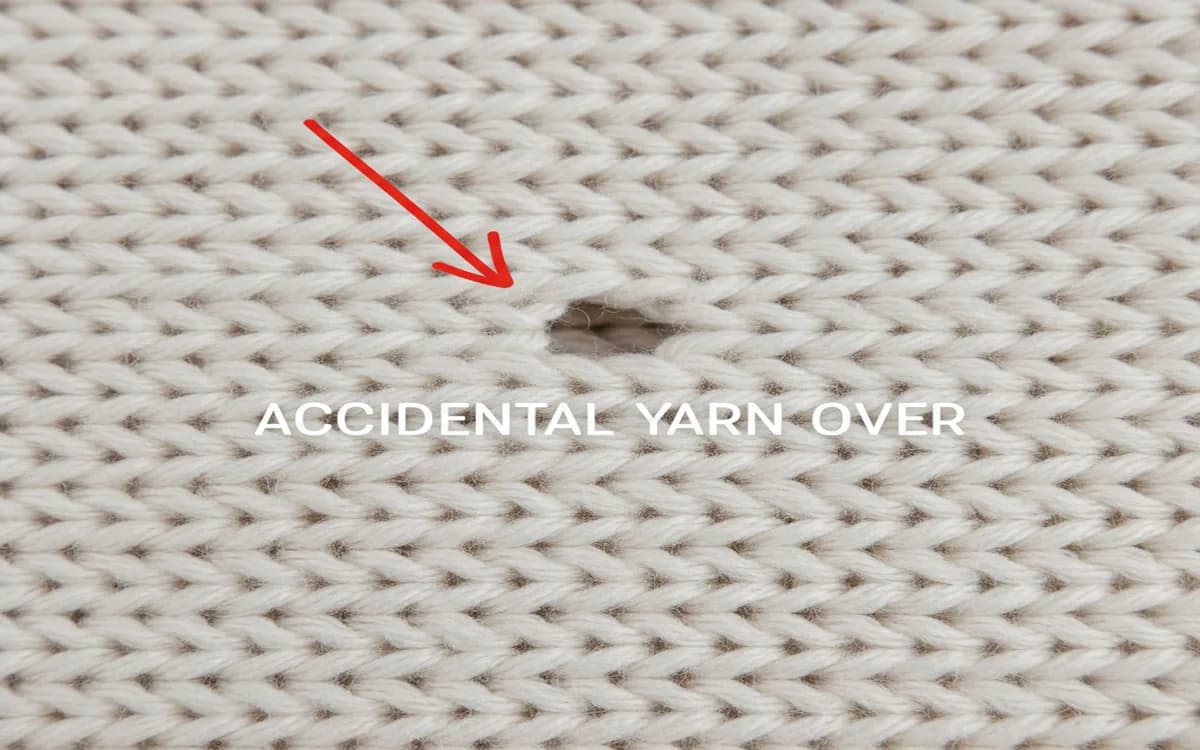
The Problem
Extra stitches appear, creating small holes in your fabric.
How to Identify
You have more stitches than you should, and there are small holes where the extras are.
How to Fix
If caught immediately: Simply drop the yarn over off your needle (it will disappear into the neighboring stitches).
If knit into on following row: You'll need to rip back to before the yarn over was created, or accept the hole.
Disguise it: In some cases, you can work the yarn over together with an adjacent stitch on the next row to eliminate the extra stitch and minimize the hole.
Prevention
Pay attention to yarn position. Yarn overs happen when the yarn is in front when it should be in back (or vice versa). Before inserting your needle, glance at where your yarn is.
Short Rows Gone Wrong
The Problem
You've worked short rows but there are holes at the turn points, or the wrap and turns look sloppy.
How to Identify
Visible holes or loose stitches at short row turning points.
How to Fix
Small holes: Use a tapestry needle to tighten the loose stitches by redistributing the extra yarn to neighboring stitches.
Large holes: You may need to pick up an extra stitch at the hole and decrease it away on the next row, or close the hole with duplicate stitch from the wrong side.
Prevention
Practice your preferred short row method on a swatch first. German short rows and shadow wraps tend to be cleaner than wrap-and-turn for many knitters.
Joining in the Round Twist
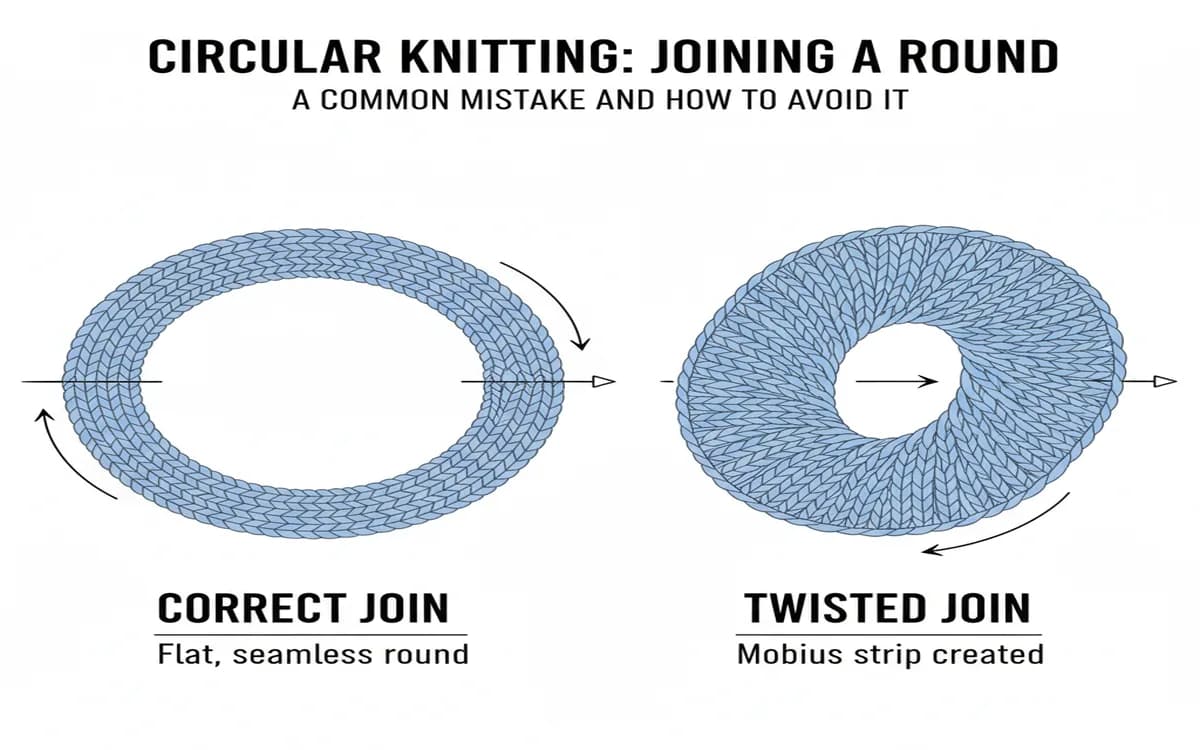
The Problem
After casting on and joining to work in the round, you discover your work is twisted — you're knitting a möbius strip, not a tube.
How to Identify
The cast-on edge spirals around instead of lying flat.
How to Fix
Caught in the first round or two: Carefully remove your needles, untwist the cast-on, and re-insert needles without knitting further.
Caught later: There's no good fix. You must rip out and start over.
Prevention
Before joining, lay your work flat and ensure all cast-on stitches are on the same side of the needle. Some knitters work one or two rows flat before joining to make twisting impossible.
Incorrect Stitch Count
The Problem
You have more or fewer stitches than you should.
How to Identify
Count your stitches (you should be doing this regularly). If the number doesn't match the pattern, something's wrong.
How to Fix
Too many stitches: Find where the extras came from. Accidental yarn overs? Knitting into the same stitch twice? Fix the source or work decreases to correct the count.
Too few stitches: Dropped stitch? Accidental k2tog? Find the cause and fix it, or work increases to restore the count.
Prevention
Count stitches at the end of every significant section. Use stitch markers between pattern repeats so miscounts are easier to locate.
Misread Pattern Instructions
The Problem
You followed the pattern but the shaping is wrong — decreases are in the wrong place, or the proportions look off.
How to Identify
Your knitting doesn't match the pattern photo or schematic. Shaping appears at unexpected points.
How to Fix
If caught early: Rip back to before the error and re-read the instructions carefully.
If caught late: Evaluate whether the error affects wearability. Sometimes you can add compensating shaping later, or accept the variation.
Prevention
Read the entire pattern before starting. Highlight your size throughout. Read ahead before each section so you know what's coming.
Sizing Errors
The Problem
You chose the wrong size. The sweater is too big or too small.
How to Identify
The finished (or nearly finished) sweater doesn't fit.
How to Fix
Too big: Depending on construction, you may be able to add waist shaping or take in the sides. Blocking smaller rarely works.
Too small: Very difficult to fix. Adding side panels is possible but rarely looks good.
Cut your losses: Sometimes the kindest thing is to give the sweater to someone it does fit and start again.
Prevention
Measure your body accurately. Calculate ease deliberately. Check finished measurements against your target before casting on, not after binding off.
The Nuclear Option: Ripping Back
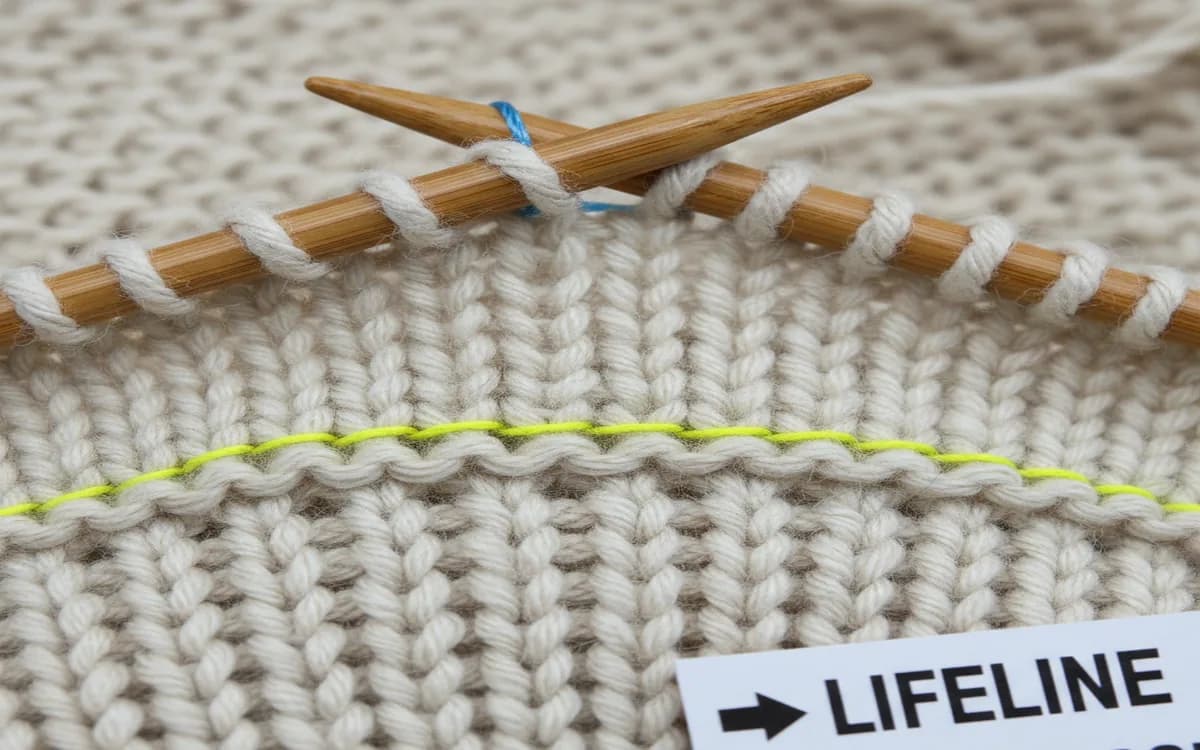
Sometimes the only real fix is to rip out and re-knit. This is frustrating but normal.
Make it easier:
- Use lifelines so you can rip to a known good row
- Rip back in good lighting with full attention
- Re-insert needles carefully, checking stitch orientation
- Accept it as part of the process, not a failure
When All Else Fails
Some fit problems can't be fixed by ripping and re-knitting the same pattern. If standard patterns don't accommodate your measurements, consider custom pattern generation.
Tools like La Maille create patterns based on your specific measurements and gauge — reducing the chance of sizing errors before you even cast on.
Frequently Asked Questions
How do I fix a dropped stitch? Use a crochet hook to pull each ladder bar through the loop, one by one, from bottom to top. For purl stitches, work from the back side.
What if my sweater is the wrong size? If too big, limited options — some waist shaping can be added. If too small, very difficult to fix. Prevention (accurate gauge and measurements) is key.
How do I avoid twisting when joining in the round? Before joining, lay work flat and ensure all cast-on stitches face the same direction. Some knitters work 1-2 flat rows first, then join.
What causes accidental yarn overs? Wrong yarn position when starting a stitch — yarn in front when it should be in back. Check yarn position before each stitch to prevent extra holes.
When should I rip back vs. try to fix in place? Major structural issues (gauge, size, twisted join) require ripping. Small errors (dropped stitch, single mistake) can often be fixed locally.
Ready to knit a sweater that fits? Try La Maille and generate a pattern designed for your exact body.